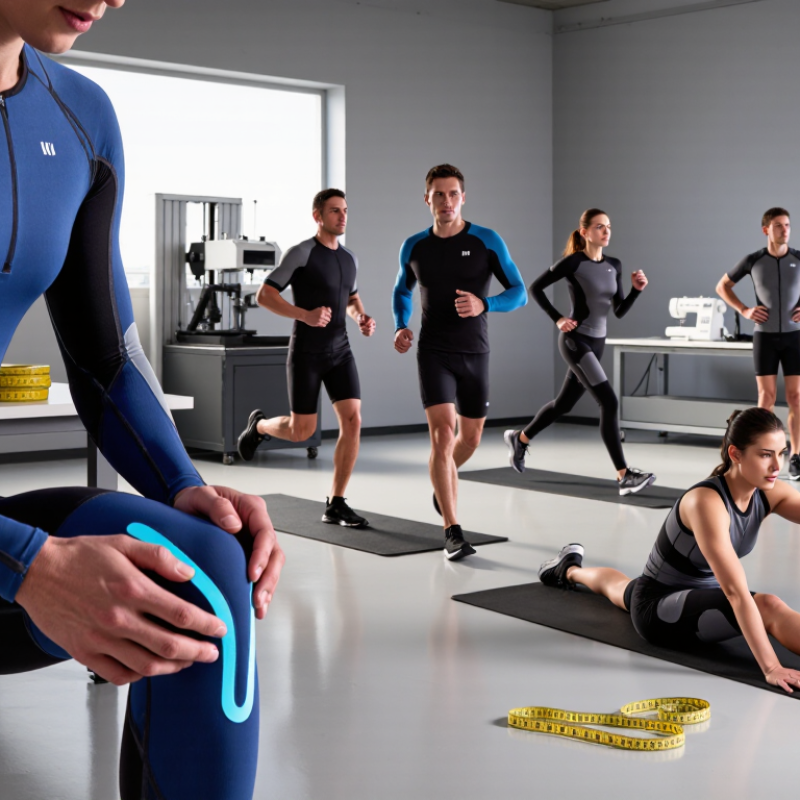
Choosing a Technical Compression Wear Manufacturer requires more than comparing prices or reviewing polished product photos. The right partner must control fabric tension, pressure distribution, seam construction, sizing accuracy, and repeated-wash performance. A sleeve may look smooth on a sample mannequin, yet pinch behind the knee after several hours. That detail matters.
The global compression wear market continues to expand. Allied Market Research valued it at approximately USD 4.6 billion in 2021 and projected growth to about USD 8.1 billion by 2031. Grand View Research also identifies rising sports participation, recovery awareness, and medical applications as important demand drivers. These figures are useful, but they do not prove that every supplier can manufacture reliable technical garments. Market growth is not quality control.
Biomechanics researcher Dr. Walter Herzog has stated, “The effects of compression garments are small and highly variable.” His observation should shape the selection process. A credible manufacturer should explain its pressure targets, testing methods, fiber composition, and tolerance limits. Ask for independent test records, not only internal claims. Check whether production samples match approved samples after washing, stretching, and extended wear. ISO 20932-1 testing can help assess elastic fabric properties, while documented quality systems improve traceability.
Experience also matters. Visit the factory when possible. Inspect cutting tables, bonding equipment, sewing lines, and final inspection stations. No factory is perfect. The stronger partner acknowledges weaknesses and shows how they are corrected. This guide examines the evidence, questions, and practical checks buyers need before selecting a Technical Compression Wear Manufacturing partner.
Define Required Compression: 15–20, 20–30, or 30–40 mmHg
How to Choose a Technical Compression Wear Manufacturer?
Define the required compression before discussing fabrics, colors, or production volume. Compression is measured in mmHg, indicating pressure against the body. The 15–20 mmHg range offers light support for everyday standing, travel, or mild leg fatigue. The 20–30 mmHg range provides moderate support and is often selected for noticeable swelling or circulation needs. The 30–40 mmHg range is firm compression and usually requires professional guidance. Stronger is not automatically better. A qualified healthcare professional should confirm the suitable level.
An experienced manufacturer should explain whether pressure is graduated, how it changes from ankle to calf, and how testing is performed. Ask for pressure-mapping records, size charts, fabric recovery data, and sample measurements. A reliable factory should also check compression after washing, stretching, and repeated wear. Small errors matter. A garment labeled 20–30 mmHg may feel very different when the size is wrong or the fabric loses elasticity. I would request samples in several sizes and test them on real users, not only mannequins.
Tips: Confirm the target body area and pressure range in writing. Compare test results from independent laboratories when available. Check whether the manufacturer can control pressure consistently across batches. Ask how they handle failed inspections. If the wearer feels numbness, unusual pain, or skin discoloration, stop using the garment and seek professional advice. Even a well-made product can be unsuitable for one person.
How to Choose a Technical Compression Wear Manufacturer?
Define Required Compression: 15–20, 20–30, or 30–40 mmHg
Select a manufacturer that can consistently produce the required pressure range after fabric development, sizing, washing, and wear testing. The values below show the nominal midpoint of each commonly specified compression range.
Light compression (15–20 mmHg) is often selected for everyday support and mild swelling. Moderate compression (20–30 mmHg) is commonly specified for stronger support and edema management. Firm compression (30–40 mmHg) requires more precise pattern engineering, fabric control, and professional fitting. Confirm the final pressure target, measurement location, tolerance, and testing method with a qualified healthcare professional and your manufacturer.
Verify Medical-Grade Systems Through ISO 13485 Certification
Choosing a technical compression wear manufacturer begins with its quality system, not its fabric catalog. For medical-grade applications, ISO 13485 certification is a practical checkpoint. It indicates a documented quality management system designed for medical devices. Ask for certificate scope, issuing body, validity, and manufacturing locations. Do not accept a logo alone. A reliable supplier should explain how design inputs become controlled patterns, graded sizes, and consistent compression results. That explanation reveals real experience.
During supplier reviews, request objective records. Look for material specifications, incoming inspection data, calibration logs, batch traceability, and nonconformance reports. Compression claims should connect to defined test methods, pressure ranges, body positions, and sampling plans. The factory should also demonstrate risk management, change control, complaint handling, and corrective action processes. These details support reliability during washing, stretching, and repeated clinical use. Ask to see anonymized evidence. Specific evidence matters more than polished presentations.
ISO 13485 does not guarantee perfect products. It creates a disciplined framework for controlling risks and learning from failures. I would still inspect production lines, review operator training, and compare samples from different lots. Check the garment after laundering, not only when new. Small inconsistencies can affect fit and pressure. That is where many evaluations become too optimistic. A strong manufacturer welcomes difficult questions, records weaknesses, and improves them through measurable actions. Choose documented capability over confident promises.
Compare MOQ, Production Capacity, Lead Times, and Quality Controls
Choosing a technical compression wear manufacturer requires more than comparing quoted prices. MOQ affects inventory risk, especially when sizes, colors, and compression levels multiply. Ask whether the MOQ applies per style, color, or size. A factory offering 500 pieces may still require 500 pieces per color. Request production records, sample measurements, and references from comparable performance-wear projects. This reveals practical experience, not sales language.
Confirm monthly capacity for knitting, dyeing, sewing, and finishing. A large factory may outsource one critical stage. That can weaken schedule control. Ask for a production calendar covering sampling, material booking, bulk production, inspection, and packing. Lead times should include fabric approval and rework allowances. Compression garments need consistent stretch recovery, so rushed production can create uneven pressure. I would not trust an attractive seven-day promise without written assumptions. Sometimes, a slower supplier is safer.
Tips: Send a detailed tech pack with target pressure, fabric composition, GSM, seam construction, and tolerance ranges. Request wash testing, colorfastness checks, dimensional stability tests, and pressure verification on finished garments. Ask how nonconforming pieces are isolated and corrected. Keep a signed sample as the inspection reference. One overlooked detail matters: test after washing, not only straight from the factory. Quality control is a process, not a final glance.
Conclusion
Choosing the right technical compression wear manufacturer requires more than comparing prices. Start by defining the required compression level, such as 15–20, 20–30, or 30–40 mmHg, according to the product’s intended use and performance goals. For products positioned for medical applications, verify that the manufacturer operates a documented quality management system aligned with ISO 13485. It is also important to understand EN compression classes, including 18–21, 23–32, and 34–46 mmHg, and confirm that testing methods match the target market’s requirements.
Reliable Technical Compression Wear Manufacturing should include pressure consistency testing across different garment areas, as well as recovery testing after at least 50 wash cycles. In addition, evaluate minimum order quantities, production capacity, lead times, raw material control, inspection procedures, and corrective-action systems. A transparent manufacturer should provide clear test records, realistic delivery commitments, and consistent communication throughout sampling and mass production. This comprehensive evaluation helps buyers select a capable partner and achieve stable quality, dependable compression performance, and efficient supply planning.