Sourcing heavyweight French terry hoodies in 2026 requires more than comparing factory prices. The fabric must feel substantial without becoming stiff, bulky, or uncomfortable. A reliable sourcing process begins with measurable details, including fabric weight, fiber composition, loopback structure, shrinkage, and colorfastness. Heavyweight French Terry Hoodies Manufacturing depends on these specifications being consistent across production batches. Ask suppliers for fabric swatches, laboratory reports, and a physical sample before discussing large orders.
A well-made hoodie should hold its shape after washing. Inspect the hood, ribbed cuffs, shoulder seams, and pocket openings carefully. Small defects often appear there first. During supplier evaluation, review factory experience, production capacity, quality-control procedures, and communication speed. Independent audits can help, but they should not replace personal sample inspection. Nothing replaces touch.
In 2026, responsible buyers should also examine recycled fibers, traceable cotton, packaging choices, and documented labor standards. These details influence brand credibility and long-term supply stability. However, sustainability claims can be vague. Request supporting documents and verify their relevance to the actual product. A lower quotation may hide weaker fabric, unstable dyeing, or costly rework. That lesson is easy to overlook. This guide explains how to compare manufacturers, control quality, negotiate practical terms, and build a sourcing plan that survives real production conditions. Some assumptions may still need revision, because markets, materials, and factory capabilities change quickly.
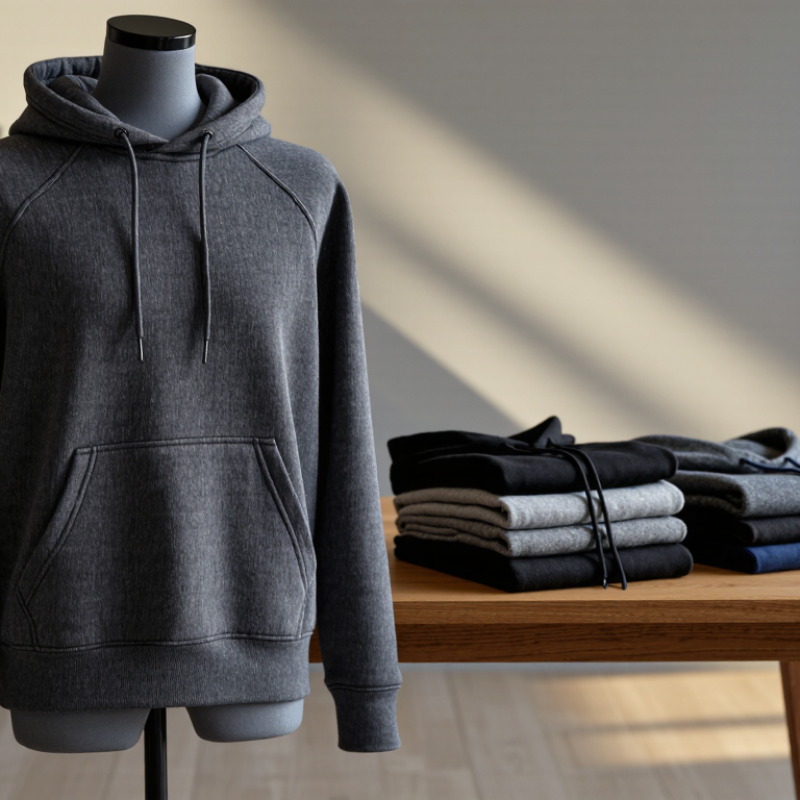
Defining Heavyweight French Terry Hoodies and Their Key Features
A heavyweight French terry hoodie is a structured sweatshirt made from dense, loopback knit fabric.
The term heavyweight usually refers to fabric weight, often around 400 to 600 GSM. GSM means grams per square metre. However, higher GSM does not automatically mean better quality.
French terry has smooth yarn on the outside and small loops inside. Those loops absorb moisture while allowing more airflow than brushed fleece. A well-made hoodie should feel substantial, not stiff, against the skin. Look for a balanced cotton blend, firm ribbed cuffs, a reinforced hood seam, and flat stitching around the shoulders. A double-layer hood adds shape and reduces sagging. The fit also matters. Broad shoulders and a slightly dropped armhole create a relaxed, modern silhouette.
When sourcing in 2026, I recommend requesting a fabric swatch and a finished sample.
Weigh the fabric, inspect loop consistency, and measure the sample before washing. Then wash it several times and check shrinkage, twisting, pilling, and colour stability. One mistake I have seen is judging quality by weight alone. A dense hoodie can still have weak seams or poor recovery at the cuffs. That detail is easy to miss. Suppliers should provide fibre content, GSM tolerance, shrinkage results, and production measurements. Clear records make comparisons more reliable and expose problems before bulk manufacturing.
Setting Quality, Weight, Fit, and Design Requirements
How to Source Heavyweight French Terry Hoodies in 2026?
Setting Quality, Weight, Fit, and Design Requirements
A strong hoodie brief starts with measurable requirements. Specify French terry weight between 450 and 600 GSM, depending on climate and price targets. Ask for fiber content, yarn count, fabric width, and shrinkage results. A dense knit should feel structured, not stiff. Check the inside loops for consistent size and tension. Uneven loops often create weak areas after washing. Request fabric swatches before approving a full sample. One attractive swatch proves very little.
Fit needs equal attention. Provide a complete measurement chart, including chest width, body length, sleeve length, hood height, and cuff opening. Test the garment after three wash cycles. Record changes in length and width. A heavyweight body may need wider shoulders and stronger seams. Review pocket placement on a real person, not only a flat sketch. Design details should support movement. Oversized hoods, thick drawcords, and heavy ribbing can alter balance. Sometimes my preferred sample looks better on paper than on the body. That is worth questioning.
Tips: Define acceptable tolerances before sampling. Inspect GSM from several fabric points. Check color, pilling, seam strength, and recovery. Keep one approved sample sealed for comparison. Do not approve softness alone. A soft finish can weaken after repeated washing. Ask the factory to explain every fabric treatment in writing. Clear records make quality decisions more consistent.
Finding and Evaluating Reliable Hoodie Manufacturers
How to Source Heavyweight French Terry Hoodies in 2026?
Finding a reliable hoodie manufacturer starts with fabric verification, not attractive sample photos. For heavyweight French terry, request the exact fabric weight, usually between 380 and 500 GSM. Ask whether the fabric is 100% cotton or blended with polyester. Confirm the loop structure, yarn count, and finishing process. A serious manufacturer should provide test reports for shrinkage, pilling, colorfastness, and fabric composition. I prefer independent laboratory results when the order is commercially important.
Factory experience matters, but practical evidence matters more. Request production photos, machine lists, sample records, and references from comparable projects. Check whether the factory controls cutting, sewing, washing, and packing internally. This reduces communication gaps. Ask for a complete pre-production sample before approving bulk manufacturing. Measure the hood, cuffs, waistband, sleeve length, and body width yourself. Small changes become expensive later. My early mistake was trusting a perfect sample without testing it after washing.
Reliable manufacturers explain their minimum order quantity, payment terms, lead time, and quality inspection process clearly. They should also discuss needle marks, seam strength, drawcord safety, and packaging requirements. A written inspection standard is essential. Use measurable limits for loose threads, stains, uneven stitching, and size variation. Communication can still fail, even with careful planning. Time zones, rushed approvals, and vague comments create real problems. Keep every revision in one shared document. An experienced supplier will welcome precise questions, though not every answer will be perfect.
Comparing Samples, Pricing, Minimum Orders, and Lead Times
Sourcing heavyweight French Terry hoodies in 2026 requires more than checking fabric weight. A 450–500 GSM fabric may feel premium, yet poor loop structure can create uneven shrinkage. Request a sample with measured fabric weight, wash results, and a complete size chart. Check the hood shape, shoulder seams, pocket alignment, and rib recovery after three washes. Small details matter.
Pricing usually depends on fabric composition, dyeing, trims, and order volume. For a basic cotton-blend hoodie, realistic factory pricing may range from 18 to 32 US dollars per piece before shipping. Ask whether sampling fees, custom labels, packaging, and inspection costs are included. A low quote can hide expensive adjustments later. It happens often.
Minimum orders commonly fall between 100 and 300 pieces per color, while custom fabric development may require more. Confirm whether sizes can be mixed within one color. Sample production may take 7–14 days, followed by 30–55 days for bulk production. Add time for fabric approval and final inspection. Do not trust one promised date. I would request a written timeline with approval deadlines, because a delayed sample can quietly push an entire launch schedule. A pre-production sample is essential, even when the first sample looks perfect.
How to Source Heavyweight French Terry Hoodies in 2026? - Comparing Samples, Pricing, Minimum Orders, and Lead Times
Indicative 2026 sourcing benchmarks for private-label production; prices are in USD per piece and exclude freight, duties, and taxes.
| Sourcing Region |
Typical Fabric & Construction |
Sample Cost |
Bulk Price at 300–499 pcs |
Bulk Price at 1,000+ pcs |
Typical MOQ |
Sample Lead Time |
Bulk Lead Time |
Best Fit |
| East Asia |
400–500 GSM cotton/polyester French terry; brushed or unbrushed interior; kangaroo pocket and rib trims |
$80–$180 |
$18.00–$27.00 |
$14.50–$21.00 |
300–500 pcs per color |
7–14 days |
45–70 days |
Large-volume programs and extensive customization |
| South Asia |
380–460 GSM cotton-rich French terry; compact yarn options; screen print, embroidery, and garment dyeing commonly available |
$70–$160 |
$16.50–$25.00 |
$13.50–$19.50 |
250–500 pcs per color |
7–15 days |
50–75 days |
Cost-sensitive brands requiring cotton-heavy fabrics |
| Southeast Europe |
400–480 GSM cotton/polyester French terry; reliable cut-and-sew quality; enzyme wash and low-quantity customization |
€90–€190 |
$24.00–$34.00 |
$20.00–$28.00 |
150–300 pcs per color |
5–12 days |
30–55 days |
European replenishment and moderate-volume orders |
| North Africa |
350–450 GSM cotton-rich French terry; standard hood construction; reactive dyeing and basic finishing |
€80–€170 |
$20.00–$31.00 |
$17.00–$25.00 |
200–400 pcs per color |
7–14 days |
35–60 days |
Shorter delivery routes into European markets |
| Western Europe |
380–450 GSM certified cotton or recycled-fiber blends; refined pattern grading; higher finishing and compliance standards |
€120–€260 |
$38.00–$58.00 |
$31.00–$46.00 |
100–250 pcs per color |
7–18 days |
35–65 days |
Premium small-batch production and traceability |
| North America |
360–450 GSM cotton/polyester French terry; domestic sampling and production; standard decoration options |
$100–$240 |
$32.00–$52.00 |
$26.00–$42.00 |
100–300 pcs per color |
5–15 days |
30–60 days |
Fast communication, local quality control, and small launches |
Comparison notes:
Fabric weight is measured before washing. Prices generally assume one standard color, one artwork position, basic packaging, and a size range of XS–XXL. Custom labels, special washes, complex embroidery, larger size ranges, testing, and expedited production may increase the quoted price and lead time. Confirm fabric composition, GSM after wash, shrinkage, colorfastness, and actual production capacity before placing an order.
Conclusion
Sourcing heavyweight French terry hoodies in 2026 requires a clear understanding of fabric structure, garment weight, softness, durability, breathability, and construction details. Buyers should first define requirements for GSM, fit, sizing, colors, trims, stitching, printing or embroidery, and overall design. These specifications create a practical foundation for Heavyweight French Terry Hoodies Manufacturing and help suppliers provide accurate samples and quotations.
The next step is to identify reliable manufacturers by reviewing their production capabilities, communication, sample quality, certifications, and experience with similar products. Compare samples carefully for fabric consistency, shrinkage, fit, seam strength, finishing, and color accuracy. Pricing should be assessed alongside minimum order quantities, development costs, payment terms, and lead times rather than considered alone. Before bulk production, establish inspection standards, testing procedures, packaging details, and approval checkpoints. Regular quality control throughout production, followed by a final inspection before shipment, can reduce defects and ensure the finished hoodies meet the agreed specifications and compliance expectations.