Navigating China's Children's Wear Sourcing Landscape: An Executive Technical Manual
Sourcing children's apparel and high-specification fleece garments from China requires a sophisticated synthesis of chemical compliance knowledge, mechanical safety protocols, and supply chain transparency. As global market standards tighten under regulatory frameworks such as US CPSIA (Consumer Product Safety Improvement Act), EU REACH Annex XVII, and China's mandatory GB 31701-2015 Safety Technical Code for Infants and Children Textile Products, B2B procurement directors can no longer rely on superficial supplier vetting. Positioning your retail or private label brand for high margin retention and zero-recall vulnerability demands a vertically integrated manufacturing partner capable of enforcing rigorous control from raw fiber to final packaged container.
Information Gain Insight: Unlike standard adult wear, children's clothing manufacturing entails non-negotiable chemical safety thresholds (e.g., Formaldehyde < 20mg/kg for Infant Class A) and mandatory dual-sensor needle detection. Partnering with a vertically integrated OEM eliminates third-party subcontracting risks where contamination or unverified trim additions typically occur.
Vertical Integration vs. Traditional Subcontracting: The Structural Advantage
Traditional apparel trading houses and fragmented factories subcontract dyeing, screen printing, embroidery, and packaging to unverified satellite workshops. This fractured operational structure introduces severe vulnerabilities: variable GSM weights, shade lot variations between production drops, uncalibrated print curing that fails wash tests, and hazardous needle fragments left embedded in inner seams.
Our 50,000 square foot state-of-the-art facility operates entirely under a single unified management hierarchy. By maintaining in-house CAD pattern engineering, 4-point fabric roll inspection, multi-head 15-color embroidery, zero-discharge screen printing, and automated conveyor needle detectors, we eliminate intermediaries. This integration yields a guaranteed 200-unit low minimum order quantity (MOQ) per style/color while maintaining an ultra-strict AQL 2.5 quality control standard across all order volumes.
Core Technical Capabilities & Quality Control Architecture
End-to-end quality assurance engineered to safeguard brand equity and accelerate time-to-market.
4-Stage Quality Inspection
Every bulk run passes through four mandatory inspection checkpoints: incoming raw fabric 4-point grading, real-time in-line stitching audits, post-production AQL 2.5 statistical sampling, and pre-shipment photo-documented audits.
Custom Textile Development
From 180 GSM combed ring-spun cotton tees to 600 GSM heavy-density french terry and brushed fleece. We engineer bespoke knits with pre-shrunk wash stability (shrinkage variance controlled under < 3%).
In-House Tech Pack Engineering
No formal tech packs? Our pattern engineers convert flat sketches, reference garments, or mood boards into production-ready digital markers, complete with size grading charts (Infant through 5XL adult).
Global Regulatory Standards for Children Apparel Exporting
Compliance failure is the single largest financial hazard in global garment sourcing. The table below delineates the key physical and chemical safety parameters maintained during our production cycles:
| Compliance Standard |
Target Region |
Critical Parameters & Testing Thresholds |
Factory Enforcement Status |
| GB 31701-2015 (Class A) |
China / Asia-Pacific |
Infant wear (≤36 mos). Formaldehyde ≤20mg/kg, pH range 4.0-7.5, zero phthalates, non-detectable carcinogenic arylamine dyes. |
Fully Certified |
| CPSIA / CPSC 16 CFR |
United States |
Lead in surface coating ≤90ppm, small parts pull-test >70N for snaps/buttons, restriction of drawstrings on neck & waist. |
Audited Laboratory |
| OEKO-TEX Standard 100 |
European Union / Global |
Annex 4 Class I & II chemical safety. Tested for pesticides, heavy metals, chlorinated phenols, and organotin compounds. |
100% Compliant Fabrics |
| Dual-Sensor Metal Detect |
Global Logistics |
100% garment scanning via high-sensitivity magnetic induction units to detect broken needle tips down to 0.8mm sphere equivalent. |
Mandatory Line Gate |
Strategic Procurement Trends in Kids & Youth Apparel (2025–2030)
The global youth apparel landscape is undergoing a dramatic structural pivot. Brand procurement teams must align their supply chains with emerging consumer behaviors and macro-economic factors driving B2B sourcing decisions.
1. The "Mini-Me" Streetwear & Heavyweight Fleece Convergence
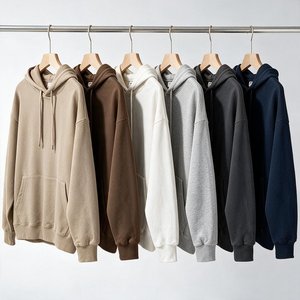
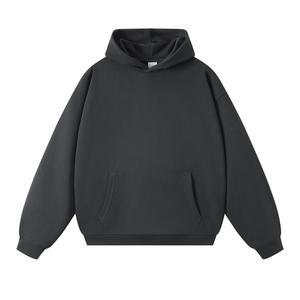
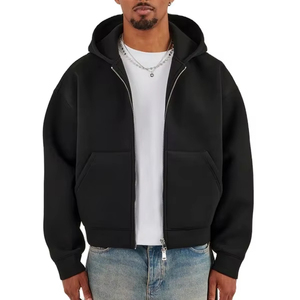
Youth apparel has decoupled from juvenile graphic tropes. Modern parents favor micro-versions of contemporary streetwear aesthetic: drop-shoulder boxy cuts, custom vintage acid wash treatments, and ultra-heavyweight cotton fleece ranging from 380 GSM to 600 GSM. Sourcing heavyweight hoodies that maintain structural loft without sacrificing skin softness requires refined yarn spinning (e.g., combed ring-spun long-staple cotton) and enzyme washing protocols that eliminate surface prickle.
2. Sustainable Fiber Integrity & Circular Traceability
Greenwashing is no longer tolerated by tier-one buyers or customs authorities. The demand for GOTS-certified Organic Cotton, recycled polyester blends (rPET), and non-toxic plant-based reactive dyes has transitioned from a niche preference to a baseline procurement specification. Brands sourcing from China must ensure their manufacturing partner provides verified transaction certificates (TCs) traceably linked back to certified ginning mills.
3. Low-MOQ Agile Drops Over Massive Inventory Holds
High interest rates and shifting trend velocities make multi-thousand unit inventory commitments risky. The dominant sourcing model has evolved toward rapid-test capsules: starting with a 200-unit per style pilot drop, analyzing direct-to-consumer sales velocity, and utilizing rapid 2-3 week bulk reorder pipelines to scale winning SKUs seamlessly without fit drift.
High-Gain Customization Technologies Built In-House
Differentiation in retail apparel hinges on high-tactile branding and durable decoration. Our facility integrates advanced finishing machinery capable of executing complex aesthetic treatments under rigorous wash-fastness benchmarks:
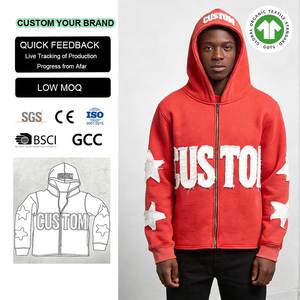
- High-Density Puff & Silicone Printing: Formulated using eco-friendly 100% silicone inks that provide dimensional 3D elevation while passing 50+ industrial home wash cycles without cracking or peeling.
- Multi-Head Industrial Embroidery: 15-color automatic Tajima heads capable of flat satin stitch, 3D foam puff, chain stitch, and complex appliqué patches engineered with soft-backing comfort layers specifically designed for sensitive young skin.
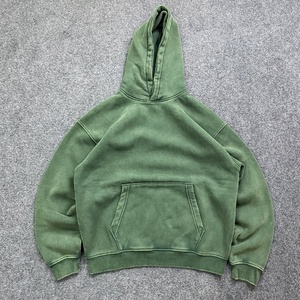
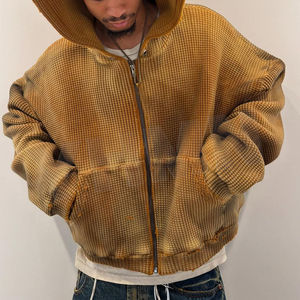
- Garment-Dye & Vintage Wash Ecosystem: Closed-loop chemical wash systems providing authentic acid wash, dirty thermal washes, mineral washes, and enzyme fading while adhering strictly to local environmental wastewater filtration standards.
- Turnkey Private Labeling & Pack-out: Custom woven neck tags, tagless heat-transfer care labels, customized FSC-certified hangtags, individual polybagging with asphyxiation safety warnings, and retail-ready barcode sticker application.
What is your baseline Minimum Order Quantity (MOQ) for custom children's and streetwear apparel?
Our standard minimum order quantity is 200 pieces per style, per colorway. Within that 200-unit baseline, size breakdowns (e.g., 2T through Youth XL, or Adult S through 3XL) are included without additional pattern splitting surcharges. Pre-production physical samples are produced and approved prior to initiating bulk manufacturing.
How do you guarantee needle safety and zero metal contamination in children's garments?
We enforce a strict unbroken-needle protocol across our sewing floors. Every broken needle must be accounted for and physically reconstituted before a replacement is issued. Furthermore, 100% of completed children's apparel runs pass through a dual-sensor conveyor needle detector system calibrated to detect ferrous particles as small as 0.8mm.
What are the realistic lead times for sampling and bulk order dispatch?
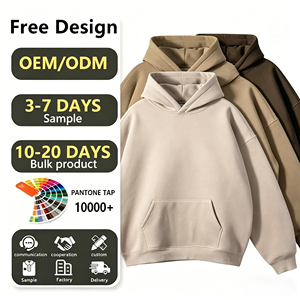
Initial sample creation (including CAD pattern development, fabric sourcing, lab dips, and decoration testing) requires 7 to 10 business days. Following sample approval, standard knitwear and fleece bulk production takes 2 to 3 weeks. Outerwear, denim, and complex garment-dyed programs typically require 3 to 4 weeks ex-factory.
Can your factory build production tech packs if we only have mood board images or sample garments?
Yes. Our in-house technical design department can engineer comprehensive production tech packs from reference photos, hand sketches, or physical sample garments. We construct complete spec sheets including measurement charts, seam construction details, trim callouts, and print placement diagrams at no additional cost for committed orders.
What specific fabric weights (GSM) and compositions are available for custom hoodies and streetwear?
We specialize in heavyweight and premium knits: 100% Combed Ring-Spun Cotton (180–280 GSM for tees), GOTS Organic Cotton, French Terry (240–380 GSM), and Ultra-Heavyweight Brushed Fleece (400–600 GSM). Custom fiber blends, including moisture-wicking poly-spandex performance fabrics and recycled blends, are available upon request.
What international shipping terms and logistics support do you provide?
We provide flexible commercial freight arrangements including DDP (Delivered Duty Paid - duties and customs cleared directly to your door/warehouse), FOB (Free on Board), and Express Courier Air shipping (DHL/FedEx/UPS). We prepare full HS-code documentation, certificates of origin, and commercial invoices required for seamless customs clearance in over 30 countries.