Procurement FAQ
Frequently Asked Questions by OEM Apparel Buyers
Comprehensive answers regarding minimum order quantities, ink chemistry, lead times, custom labeling, and global logistics.
What is your Minimum Order Quantity (MOQ) for custom OEM screen printed garments?
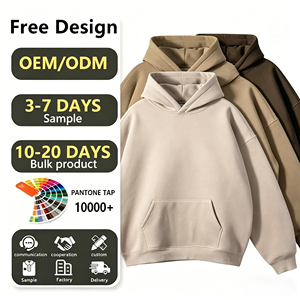
Our standard MOQ is 200 pieces per style / colorway. Within this 200-unit minimum, you can request a custom size breakdown across S, M, L, XL, 2XL, and 3XL at no additional charge. We also produce 1 to 3 physical pre-production samples for physical sign-off before full bulk commitment.
Which screen printing techniques do you execute in-house?
Our 50,000 sq ft facility operates multi-head automatic screen printing carousels supporting:
- High-Density Plastisol: Sharp detail, vibrant opaque colors, tactile 3D raised prints.
- Eco Water-Based & Discharge: Soft-hand, breathable prints ideal for vintage tees and organic cotton.
- Specialty Finishes: Micro-Puff 3D, Silicone elastomeric prints for activewear, Metallic foils, Reflective glass-bead inks, and Glow-in-the-dark formulations.
How do you prevent ink cracking and color fading on heavy fleece hoodies?
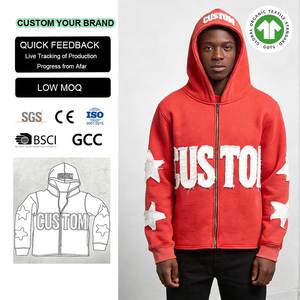
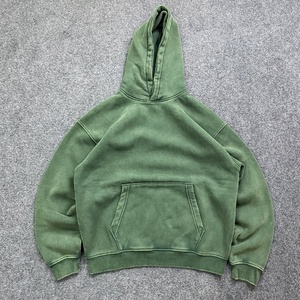
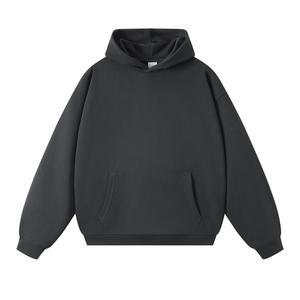
Heavyweight fleece (380 to 600 GSM) has a thick surface pile. We utilize specialized mesh counts (110–160 mesh) combined with low-viscosity high-pigment underbases and flash-curing between color stations. Curing takes place in industrial forced-air conveyor ovens monitored by digital thermal probes to achieve full polymer cross-linking without scorching fabric fibers.
What are your turnaround times for sampling and bulk export production?
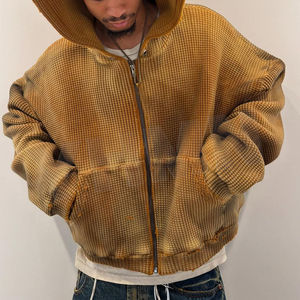
Quotations are issued within 24 to 48 hours of specification submission. Pre-production sampling takes 7 to 10 business days. Upon sample approval, bulk production requires 2 to 3 weeks for standard knits/fleece, and 3 to 4 weeks for complex garment-dyed or distressed acid-wash lines.
Do I need to supply formal tech packs, or can you develop them for me?
You do not need finished tech packs. Our in-house pattern engineering team builds production-ready tech packs from artwork sketches, reference garments, or mood boards. We provide complete measurement specs, grading ratios, trim callouts, and artwork placement proofs prior to screen development.
Can you provide full private label packaging and custom trims?
Yes. We provide complete white-label and private-label packages including custom woven neck labels, screen-printed care tags, silicone sleeve badges, custom hangtags with barcoding, individual eco poly-bags, and branded carton packaging ready for direct e-commerce fulfillment or retail placement.
What quality control protocols are implemented during screen printing runs?
We follow strict AQL 2.5 Quality Standards across four inspection gates: (1) 4-point inspection of incoming raw fabric rolls; (2) In-line sewing and print registration checks every 30 minutes; (3) Post-production wash-fastness and rub-adhesion testing; and (4) Pre-shipment photo audit with full packing list verification.
Which international shipping terms (Incoterms) and destination countries do you support?
We ship to over 30 countries across North America, Europe, Oceania, and the Middle East (including USA, UK, Canada, Australia, UAE, Germany, France). We offer Flexible Incoterms including DDP (Delivered Duty Paid), FOB, and express air delivery with complete customs documentation, tariff classification, and certificate of origin handling.