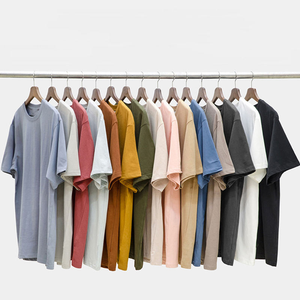
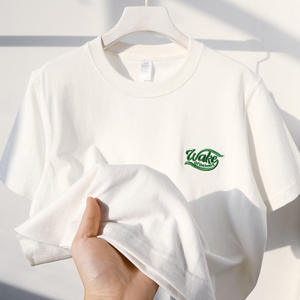
Wholesale Men's Graphic Oversized T-Shirts Cotton Logo Label Blank Tee
240-280 GSM
Drop Shoulder
Screen Print

Explore our core custom apparel lines engineered for high-end streetwear brands, corporate uniforms, and international retail drops. Minimum Order Quantity (MOQ): 200 pcs/style.
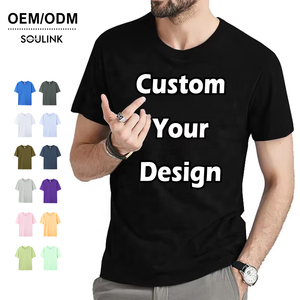
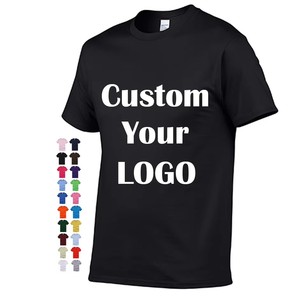
The global textile and custom apparel procurement landscape has undergone a monumental structural shift. Apparel brands, e-commerce retailers, and corporate buyers are moving away from traditional fragmented sourcing models toward vertically integrated OEM/ODM manufacturing partnerships. In an era dictated by rapid drop schedules, stringent sustainability mandates, and uncompromising quality expectations, brand profitability hinges entirely on factory reliability, fabric engineering precision, and critical-path transparency.
This technical whitepaper examines the core operational pillars, engineering advancements, and strategic sourcing methodologies required to navigate OEM (Original Equipment Manufacturing) and ODM (Original Design Manufacturing) custom t-shirt production. Backed by real-world factory metrics and international quality control benchmarks, this document serves as a comprehensive guide for procurement directors, fashion founders, and global supply chain strategists.
Designed for established brands possessing existing tech packs, vector artwork, and strict physical measurements. Under the OEM model, the factory acts as an execution powerhouse, turning precise tech pack specifications into exact physical garments.
Tailored for rapid-growth streetwear labels and emerging apparel startups needing factory-led design support. The factory provides end-to-end R&D, pre-developed silhouette templates, and trend-aligned fabric suggestions.
Procurement teams must anticipate macroeconomic shifts and technological advancements in garment construction. Sourcing strategies for 2026 and beyond are anchored in four foundational movement trends:
The global streetwear boom has transformed consumer expectations regarding fabric weight and structural integrity. Traditional lightweight tees (140-160 GSM) are being supplanted by ultra-heavyweight combed ring-spun cotton ranging from 240 GSM up to 340 GSM for t-shirts, and up to 600 GSM for fleece hoodies. These dense knits offer superior drape, architectural boxy fits, and extended wear durability.
Regulatory pressures in North America and Europe mandate verified eco-friendly supply chains. Procurement directors now prioritize factories with standard GOTS (Global Organic Textile Standard) certifications, OEKO-TEX Standard 100 compliance, and closed-loop bamboo fiber processing. Bamboo-derived textiles provide natural antibacterial properties, exceptional soft hand-feel, and 100% biodegradability.
Single-pass screen printing is rapidly giving way to multi-technique hybrid decorations. Modern OEM facilities utilize high-density 3D silicone printing, soft-hand water-based discharge inks, 15-color multi-head embroidery, and high-build puff prints. Combining tactile puff graphics with flat embroidery creates textured contrast that boosts retail value.
To assist sourcing personnel in formulating precise tech pack criteria, the matrix below details industrial standard material options and recommended decoration pairings:
| Fabric Blend | GSM Range | Knitting Construction | Optimal Printing Technique | Best Application |
|---|---|---|---|---|
| 100% Combed Ring-Spun Cotton | 180 – 220 GSM | Single Jersey (30s/1 or 40s/2) | Discharge, Water-based, Screen Print | Premium Retail & Essentials Lines |
| Heavyweight Luxury Cotton | 240 – 300 GSM | Compact Double Jersey / Interlock | Puff Print, High-Density Silicone, 3D Embroidery | High-End Streetwear Drops |
| Organic Bamboo / Cotton Blend | 170 – 200 GSM | Eco-Soft Jersey (Silicone Washed) | DTG (Direct-to-Garment), Eco Inkjet | Eco-Friendly Activewear & Sustainable Merch |
| Tri-Blend (Poly/Cotton/Rayon) | 150 – 180 GSM | Heathered Micro-Jersey | Soft-Hand Screen Print, Sublimation | Athletic Training & Vintage Merchandise |
| Heavyweight French Terry | 320 – 460 GSM | Loopback / Brushed Fleece | Appliqué Patch, Heavy Chain-Stitch | Streetwear Sweatshirts & Oversized Tees |
Operated out of a state-of-the-art 50,000 square foot owned production facility, our factory eliminates third-party sub-contracting risks. By executing fabric knitting, dyeing, cutting, decoration, sewing, and retail packaging under one roof, we guarantee rigid adherence to timelines and specification fidelity.
Quality control is not an afterthought—it is embedded into every operational stage via our four inspection gates:
Every roll of raw fabric undergoes a 4-Point Inspection System checking for GSM variance, color fastness, shade continuity, and shrinkage after lab wash testing.
Floor supervisors execute hourly stitch-per-inch (SPI) verification, seam tension checks, and measurement audits against approved spec sheets during assembly.
Printed and embroidered panels pass wash-durability testing, cure adhesion checks, and alignment cross-verification prior to final garment assembly.
Finished goods undergo rigorous statistical sampling covering loose threads, label placement, measurement tolerances, and photo-documented packing audits.
Don't have a formal CAD tech pack? Our experienced pattern engineers convert raw design sketches, physical reference samples, or design mood boards into production-ready tech packs. Complete with point-of-measurement (POM) charts, seam construction callouts, artwork positioning guides, and bill of materials (BOM) breakdowns.
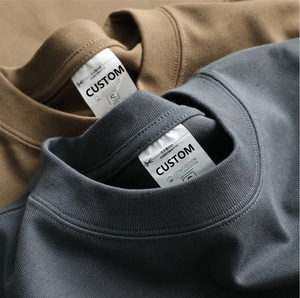
Deliver shelf-ready or e-commerce ready garments straight to your distribution channels. We produce custom woven neck labels, heat-transfer size tags, FSC-certified hangtags, customized polybags with warning prints, and custom-branded shipping cartons with full barcode scannability.
Direct answers to technical procurement questions answered by our factory engineering team.
Our standard MOQ is 200 pieces per style, per colorway. Within this 200-piece baseline, we offer free size breakdowns (e.g., S through 3XL). For custom fabric milling or specialized garment washes (acid wash, mineral wash), MOQs can be adjusted depending on raw material yarn availability.
Quotation proposals are delivered within 24–48 hours of spec receipt. Pre-production physical sampling requires 7 to 10 business days. Once fit samples, lab dips, and artwork proofs are signed off, standard bulk apparel production takes 2 to 3 weeks for knitwear, and 3 to 4 weeks for heavily processed outerwear or custom dyed programs.
While client-supplied vector tech packs expedite turnaround, they are not mandatory. Our design engineers can build production-ready digital tech packs from physical garments, high-resolution imagery, or detailed design sketches, establishing exact POM charts and trim spec sheets for your sign-off.
All knitted fabrics undergo pre-shrinking and heat-setting procedures before cutting. We maintain strict quality standards: fabric shrinkage is controlled within ≤ 3-5% after commercial washing, and reactive dye processes achieve a color fastness rating of Grade 4 or higher against ISO 105 standards.
We provide comprehensive international shipping options including DDP (Delivered Duty Paid), FOB, CFR, and Express Air Freight. We manage all export documentation, HS-code classification, customs clearances, and commercial invoicing for seamless delivery to over 30 countries including the USA, Canada, UK, Australia, UAE, and EU nations.
Our facility houses screen printing lines up to 8 colors (Plastisol, Water-Based, Discharge, Puff, High-Density Silicone), Direct-to-Garment (DTG) digital printers, roll-to-roll dye sublimation units, and multi-head embroidery machines supporting up to 15 colors for 3D puff, satin stitch, and chenille appliqué.