Featured Apparel OEM/ODM Heavyweight Product Catalog
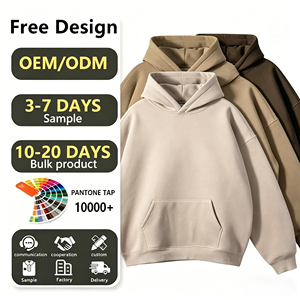
Explore our flagship heavyweight streetwear fleece, custom distressed hoodies, and vintage acid-wash silhouettes. Every garment showcased below is fully customizable—from custom GSM knits, pigment wash formulations, to high-density puff printing and multi-head industrial embroidery.
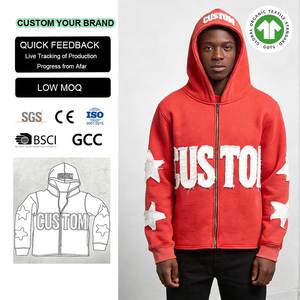
Custom Manufacturer Sweatshirt 600gsm Heavyweight Thick Distressed Cropped Zip up Embroidery Patch Men Acid Wash Zip up Hoodie
600 GSM Fleece
Acid Wash
Embroidery Patch
Get Catalog
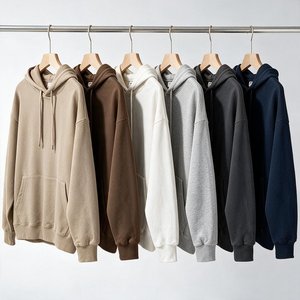
Top Quality Hoodies Sudaderas Y2k Screen Printed Winter Hoodie Anti-Pilling Loose Fit Men's Hoodie Pullover Hoddies Men
Anti-Pilling
Y2K Screen Print
Loose Fit
Get Catalog
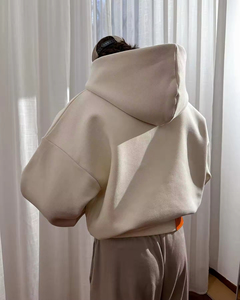
Custom Baggy Oversize Blank Unisex Drop Shoulder Heavyweight Crop Cut Big Hoodie 500Gsm Cotton Solid Color Cropped Baggy Hoodies
500 GSM Cotton
Drop Shoulder
Cropped Fit
Get Catalog
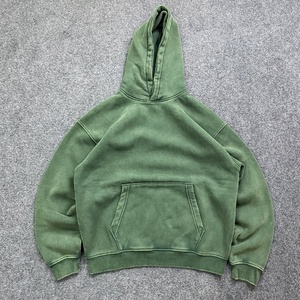
Custom Logo Distress Acid Wash Oversize Pocket Vintage Printing Blank Plain Loose Streetwear Hoodies For Men
Vintage Wash
Distressed Detail
Streetwear
Get Catalog
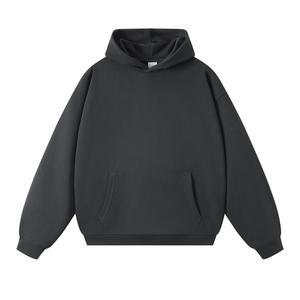
380gsm Heavyweight Fleece Hoodie Boxy Fit Streetwear Cotton Rich Pullover Custom Private Label Blank Hoody
380 GSM Fleece
Boxy Silhouette
Private Label
Get Catalog
100% Cotton Hoodies Blank Thick Fleece Heavy Weight Oversized Hoodies Custom Print Logo Men's Hoodies & Sweatshirts
100% Ring-Spun Cotton
Heavy Fleece
Custom Logo
Get Catalog
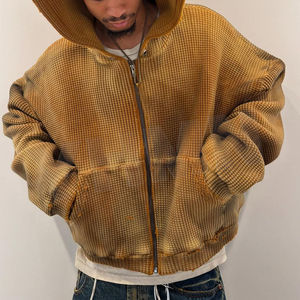
Custom Cotton Dirty Thermal Oversized Heavyweight Zip up Waffle Knit Blank Vintage Distressed Acid Wash Hoodies Sweatshirt Men
Waffle Thermal
Dirty Wash
Heavy Zip Up
Get Catalog
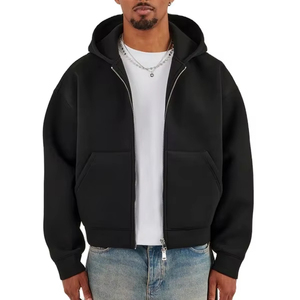
Zip Up Hoodie Heavyweight Pullover Boxy Hoodie Print Logo Heavy Weight 420 Gsm Plain 100%cotton Zipper Custom Zip Up Hoodie
420 GSM Cotton
Metal Hardware
Boxy Pullover
Get Catalog
50,000 sq ft
Owned Manufacturing Hub
Vertically integrated end-to-end facility
3,000+
Global Brands Produced
Across 30+ export destinations
AQL 2.5
Strict Quality Standard
Zero-defect tolerance policy
200 Units
Low Entry MOQ
Free size breakdown (S to 3XL)
Executive Industry Whitepaper: Navigating Global Apparel Sourcing & Vertical Manufacturing Excellence
In today's hyper-competitive global apparel landscape, brand survival and margin expansion depend heavily on supply chain transparency, fabric structural integrity, and agility in lead-time management. As a premier apparel sourcing factory and custom cut-and-sew partner established in 2012, Zega Apparel addresses the systemic friction points that plague modern fashion enterprises—ranging from inconsistent dye-lot variations to supply chain disruptions caused by multi-tiered subcontracting.
Traditional apparel sourcing often forces brand directors into a trade-off between minimum order quantities (MOQs) and landed cost per unit. Mid-market brands and scaling streetwear labels frequently face compromise when dealing with overseas trading houses that lack direct oversight over the sewing floor. By consolidating pattern engineering, raw fabric milling, dye house processing, screen printing, high-density embroidery, and retail packaging within an owned 50,000 ft² vertically integrated infrastructure, we eliminate intermediary margin stacking while guaranteeing strict adherence to ISO 9001 quality compliance.
The Mechanics of High-GSM Heavyweight Apparel Construction
The global demand for luxury streetwear and durable luxury loungewear has shifted consumer expectations toward ultra-heavyweight knitwear (spanning 380 GSM to 600 GSM). Achieving structural drape, shape retention, and anti-pilling longevity at these high surface densities requires technical precision across yarn selection and knit tension configuration.
Combed Ring-Spun Cotton
Long-staple cotton fibers are spun to purge short impuri-ties, delivering superior tensile strength, smooth surface finish for printing, and zero hand-feel roughness.
High-Density French Terry
Engineered with unbrushed micro-loops on the interior facing for optimal thermal regulation, breathability, and structural bulk without synthetic fillers.
Preshrunk Fabric Engineering
All raw goods undergo heat setting and sanforization washing protocols to ensure post-laundering dimensional stability under 3% shrinkage tolerances.
Future Trends in Global Apparel Sourcing & Manufacturing (2025–2030)
As search quality standards evolve, enterprise buyers demand actionable data over superficial promises. The global apparel sourcing ecosystem is undergoing a fundamental shift driven by consumer sustainability mandates, digital pattern engineering, and micro-capsule drop strategies. Modern procurement officers must align with manufacturers capable of navigating these four macroeconomic trends:
1. Sustainable Material Traceability
Global compliance standards such as GOTS (Global Organic Textile Standard) and OEKO-TEX Standard 100 are transitioning from luxury differentiators to mandatory entry criteria for North American and European retail shelves. Modern sourcing factories must maintain chain-of-custody documentation for organic cotton and recycled polyester blends.
2. Agile Micro-Batch Scaling
The traditional 5,000-unit minimum is dead. Modern brands utilize drop-based models, testing market demand with 200 to 500 units before triggering full production runs. Sourcing partners must offer low-MOQ flexibility without imposing exorbitant sample surcharges or compromised unit economics.
3. Advanced Surface Treatments
Consumers increasingly demand customized tactile finishes—including mineral acid washes, dirty oil washes, distressed abrasion details, and silicone softeners. Achieving consistent wash aesthetics across 1,000+ units requires automated dye vats and computerized chemical dosing.
4. 3D Digital Tech Pack Integration
Transitioning from physical prototype iterations to 3D virtual pattern prototyping cuts sample turnaround times from weeks to days, reducing waste and accelerating time-to-market for rapid seasonal releases.
Factory Comparative Benchmark: Enterprise Sourcing vs. Traditional Trading Houses
Evaluating apparel suppliers requires analyzing total cost of ownership (TCO), defect mitigation protocols, and intellectual property protection. Below is a detailed breakdown comparing direct vertically integrated manufacturing with third-party sourcing agents.
| Manufacturing Parameter |
Zega Apparel Integrated Factory |
Conventional Overseas Trading Houses |
| Production Footprint |
Owned 50,000 ft² Facility with 200+ Operators |
Outsourced Subcontractor Network |
| Minimum Order Quantity (MOQ) |
200 Pcs / Style / Color (Free Size Breakdown) |
1,000 - 3,000 Pcs per Colorway |
| Quality Inspection Standard |
4-Stage Gate Inspection & AQL 2.5 Audit System |
Basic Visual Spot Check Prior to Shipping |
| Tech Pack & Pattern Support |
In-House Pattern Engineers & CAD Marker Drafting |
Requires Client-Supplied Production Pack |
| Bulk Lead Time |
2–3 Weeks (Post-Sample Signoff) |
6–12 Weeks Average Lead Time |
| Custom Wash & Dyeing Capabilities |
In-House Reactive, Acid, Pigment & Mineral Washes |
Limited Standard Dye-Lot Options |
The AQL 2.5 Four-Stage Quality Assurance Framework
Garment defects erode brand reputation and incur costly return rates. To preserve brand integrity, our factory enforces a rigorous four-stage quality gate protocol built around the Acceptable Quality Limit (AQL 2.5) international standard:
Gate 1: 4-Point Raw Fabric Inspection
Incoming fabric bolts are inspected for GSM weight accuracy, color consistency under D65 standard lighting, thread defects, and post-wash shrinkage stability.
Gate 2: In-Line Assembly Checks
Hourly audits across sewing lines inspect seam tension, stitch-per-inch (SPI) counts, ribbing alignment, and sleeve length tolerances during assembly.
Gate 3: Post-Decoration Audits
Screen prints, puff prints, and embroidery motifs undergo wash durability, stretch adhesion, and stitch density verification to prevent peel-off.
Gate 4: Pre-Shipment Audit
Final statistical sampling verifies woven label positioning, hangtag barcode data, polybag folding, and carton pack lists prior to container sealing.
Frequently Asked Questions (Sourcing & Procurement FAQ)
Addressing core technical and commercial questions essential for brand managers, apparel procurement directors, and supply chain analysts.
What is your baseline Minimum Order Quantity (MOQ) for custom garments?
Our standard MOQ is 200 units per style per colorway. Within this 200-unit commitment, clients enjoy full freedom to distribute sizing across S, M, L, XL, 2XL, and 3XL at no additional cost. For pre-production evaluation, we craft 1 to 3 physical fit samples before initiating bulk cutting.
What are the lead times for sample development and bulk production?
Sample development and pattern creation require 7 to 10 business days. Once sample approval and lab dip sign-offs are secured, standard bulk production for fleece and knitwear takes 2 to 3 weeks. Complex outerwear, denim, or specialty garment-dyed programs typically require 3 to 4 weeks depending on order volume.
Can you manufacture products if we do not possess a formal Tech Pack?
Yes. Our in-house technical design team can construct production-grade Tech Packs directly from physical reference garments, high-resolution sketches, or mood boards. We establish measurement specs, fabric GSM requirements, stitch construction call-outs, and artwork placement vectors on your behalf.
What spectrum of fabric weights and raw materials can you source?
We source and knit a vast array of raw textiles, including combed ring-spun cotton (180 to 280 GSM), GOTS-certified organic cotton, French terry (240 to 380 GSM), ultra-heavyweight brushed fleece (380 to 600 GSM), moisture-wicking polyester-spandex blends, nylon ripstop, and heavy twill. Custom fabric knitting and yarn dyeing are also available upon request.
Which decoration, printing, and wash techniques are performed in-house?
Our in-house capabilities include screen printing (plastisol, water-based, discharge, puff, silicone, high-density), Direct-To-Garment (DTG), all-over dye sublimation, multi-head industrial embroidery (flat, 3D puff, chain-stitch, appliqué), as well as garment dyeing, acid washing, enzyme washing, and vintage distressed treatments.
What international logistics and trade delivery terms do you support?
We support flexible international commercial terms including DDP (Delivered Duty Paid), FOB (Free on Board), and Express Air Freight. We ship to over 30 countries—including the United States, United Kingdom, Canada, Australia, UAE, and European Union destinations—handling customs clearance, HS code classification, and export documentation seamlessly.
Do you offer full private label retail packaging?
Absolutely. We deliver end-to-end white-label and private-label packages, including custom woven neck labels, care and content tags, heat-seal transfers, custom printed hangtags, branded eco-polybags, custom cardboard boxes, tissue paper, and scannable UPC/EAN barcode sticker labeling.
How do you manage intellectual property and design confidentiality?
We enforce strict non-disclosure agreements (NDAs) for all client programs. Your custom patterns, original artwork files, wash recipes, and proprietary tech packs are stored securely in our archived servers and are never shared or resold to third-party entities.
Partner with a World-Class Apparel Sourcing Manufacturer
Scale your brand with precision engineered cut-and-sew production, low MOQs, and reliable bulk execution. Request our complete product catalog and custom quotation today.